It's one of the most common questions Ottawa car owners ask us: should I get paint protection film or ceramic coating? The short answer is both — but if you're choosing one first or weighing costs, the decision depends on your priorities, your driving habits, and how soon you act after buying the vehicle.
In this guide, we'll break down exactly what each product does, why the preparation process is nearly identical for both, why timing matters far more than most people realize, and why stacking PPF and ceramic coating together is the ultimate way to protect your investment.
Quick Refresher: What Is PPF?
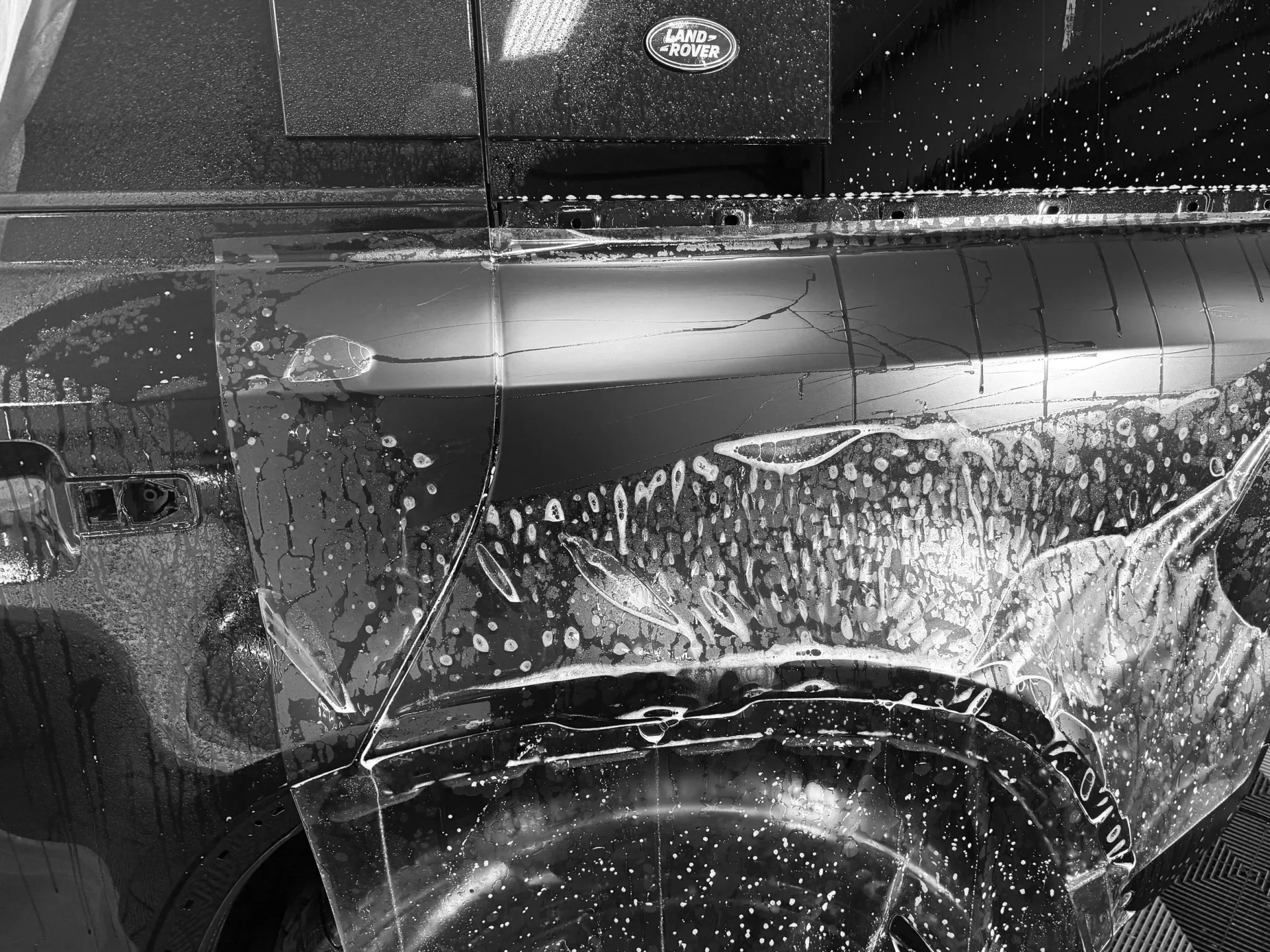
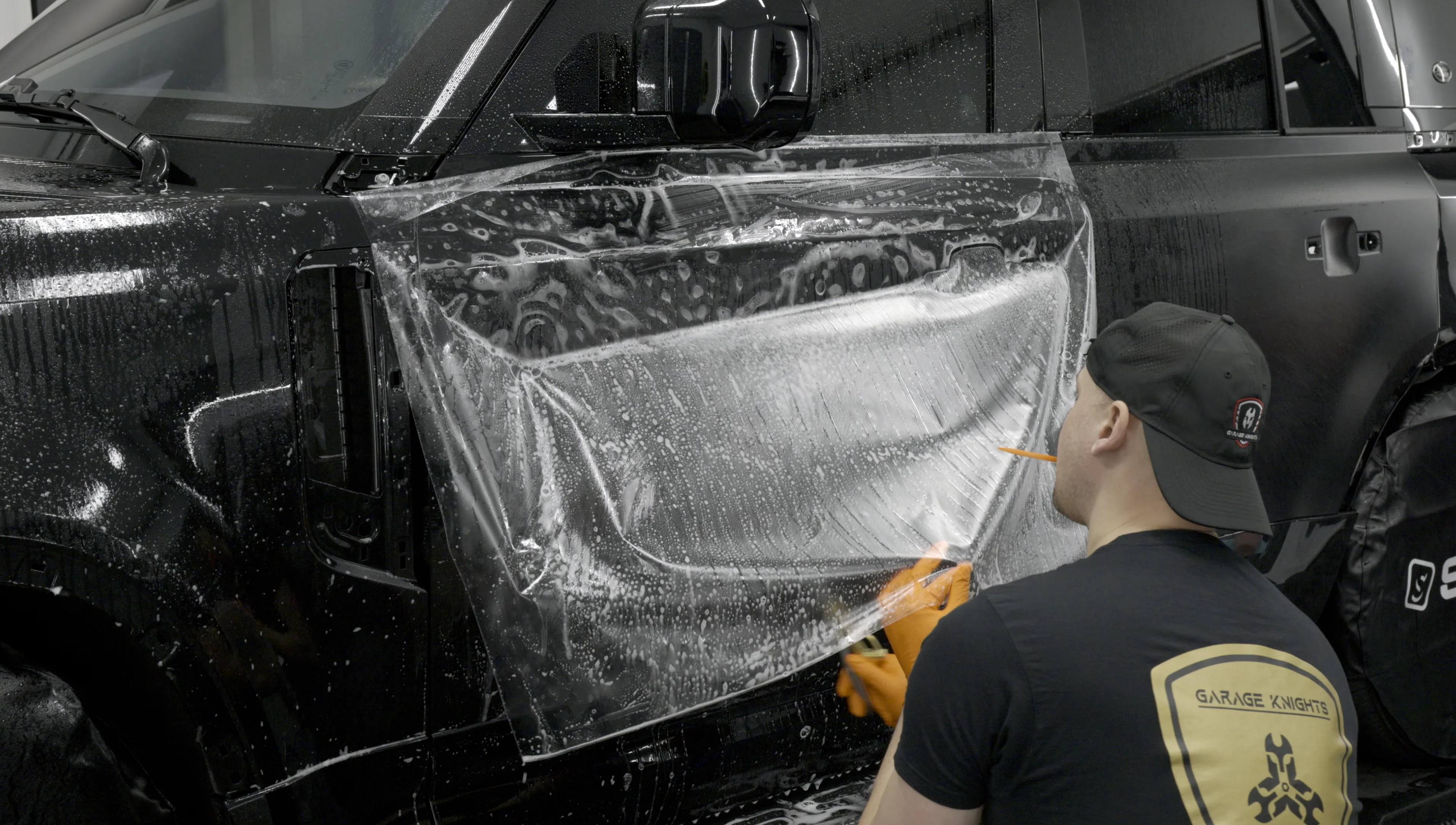
Paint protection film (PPF) is a thick, optically clear thermoplastic urethane film applied to your vehicle's painted surfaces. It acts as a physical barrier — absorbing impacts from rock chips, road debris, sand, and gravel that would otherwise chip or scratch your paint permanently. Modern PPF is self-healing: minor scratches and swirl marks in the film disappear with heat from the sun or warm water, keeping the surface looking fresh without any intervention.
PPF is the only product that can physically prevent stone chips. No coating, wax, or sealant can do what film does. That's why it's the first line of defence for anyone serious about keeping their paint in factory condition.
Quick Refresher: What Is Ceramic Coating?
Ceramic coating is a liquid polymer that chemically bonds to your vehicle's clear coat at a molecular level. Once cured, it creates a semi-permanent hydrophobic layer that repels water, dirt, bird droppings, bug splatter, tree sap, and UV rays. Your vehicle stays cleaner longer, washes easier, and the paint resists fading and oxidation for years.
Ceramic coating excels at chemical and environmental protection. It won't stop a rock chip — that's not its job — but it will keep contaminants from bonding to and degrading your paint or film over time.
What Each Protects Against
PPF and ceramic coating complement each other because they guard against completely different threats. Here's how the protection breaks down:
- PPF protects against: rock chips, road debris, gravel, sand, door dings, light scratches, and physical impacts
- Ceramic coating protects against: UV damage, oxidation, bird droppings, bug acids, tree sap, water spots, road salt, and chemical contaminants
- PPF is self-healing — minor surface scratches disappear with heat
- Ceramic coating is hydrophobic — water and dirt sheet off, making washing faster and easier
- PPF is typically applied to high-impact areas (hood, bumper, fenders, mirrors, door edges)
- Ceramic coating is applied to the entire vehicle — paint, glass, wheels, and even on top of PPF
Think of it this way: PPF is your vehicle's armour against physical damage, while ceramic coating is the shield against everything chemical and environmental. One stops rocks; the other stops contamination.
The Preparation Process
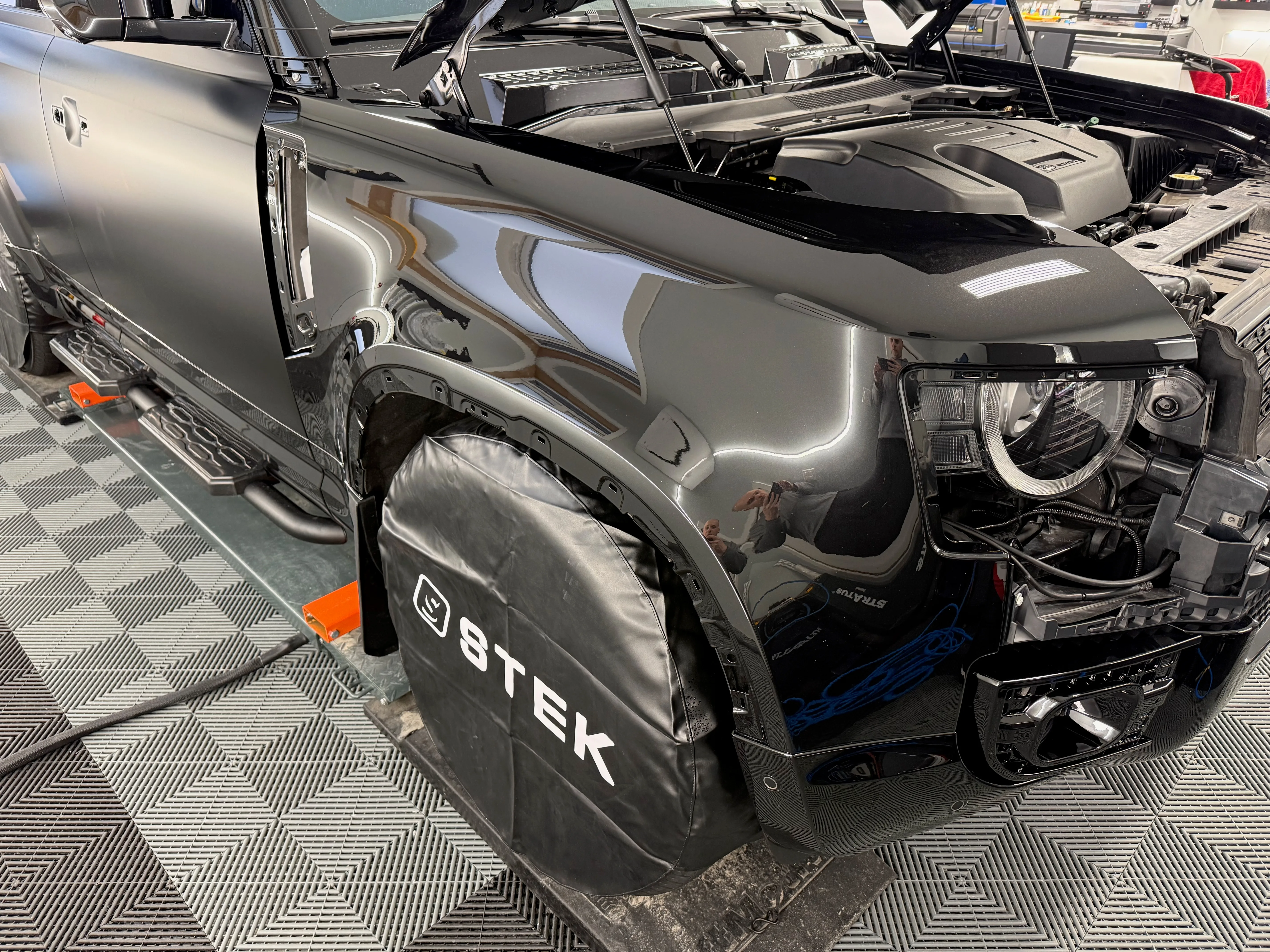
Here's something most people don't realize: the preparation work for PPF and ceramic coating is nearly identical. Both require a thorough wash, decontamination, and — most importantly — paint correction to remove swirl marks, scratches, and imperfections from the clear coat before anything is applied.
Paint correction is strongly recommended before either service. With ceramic coating, correction is essential because the coating locks in whatever condition the paint is in — imperfections and all. With PPF, the film can hide some minor clear coat imperfections, but correction still gives a noticeably better result underneath. A properly corrected surface gives both products the best possible foundation to bond to and look their best.
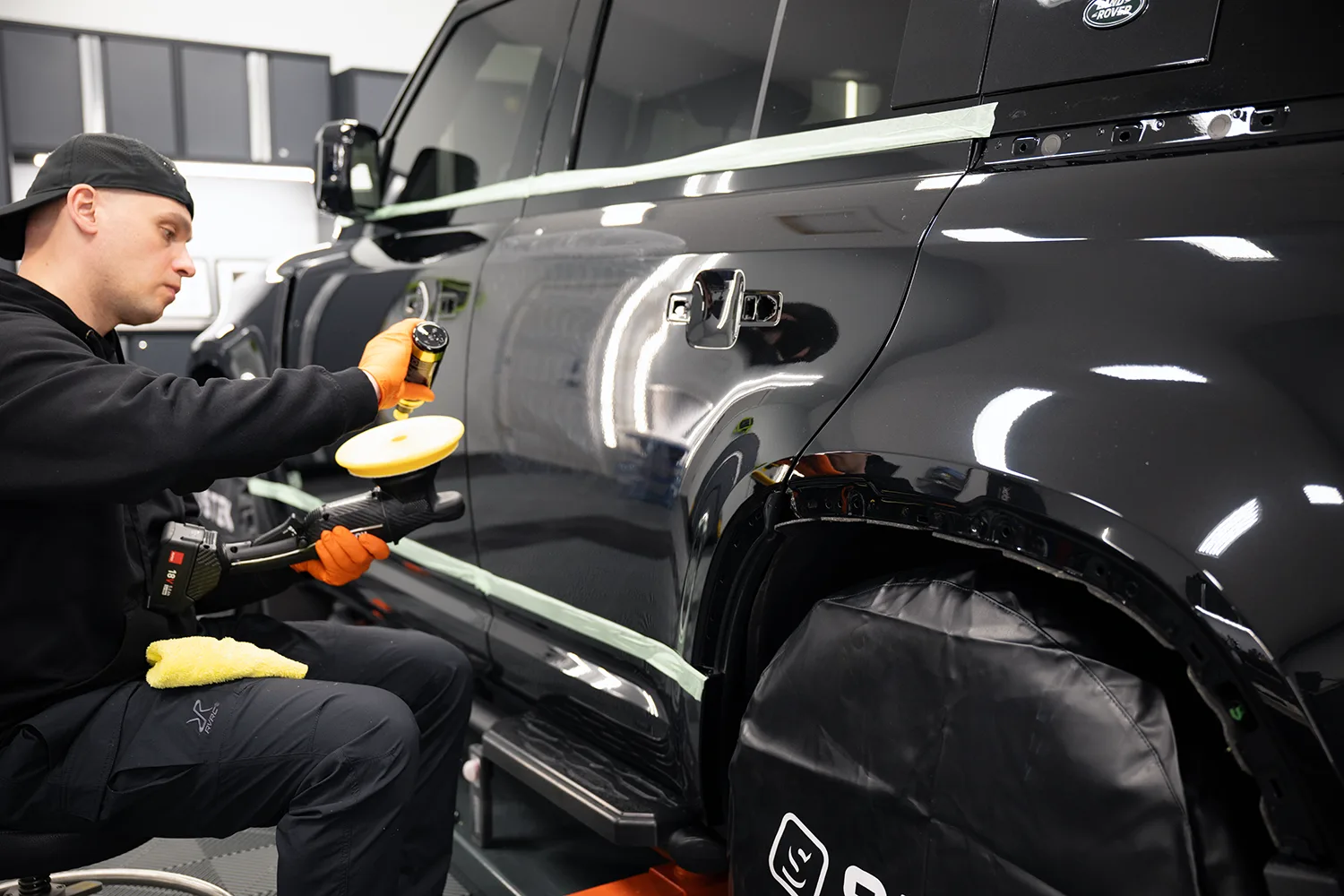
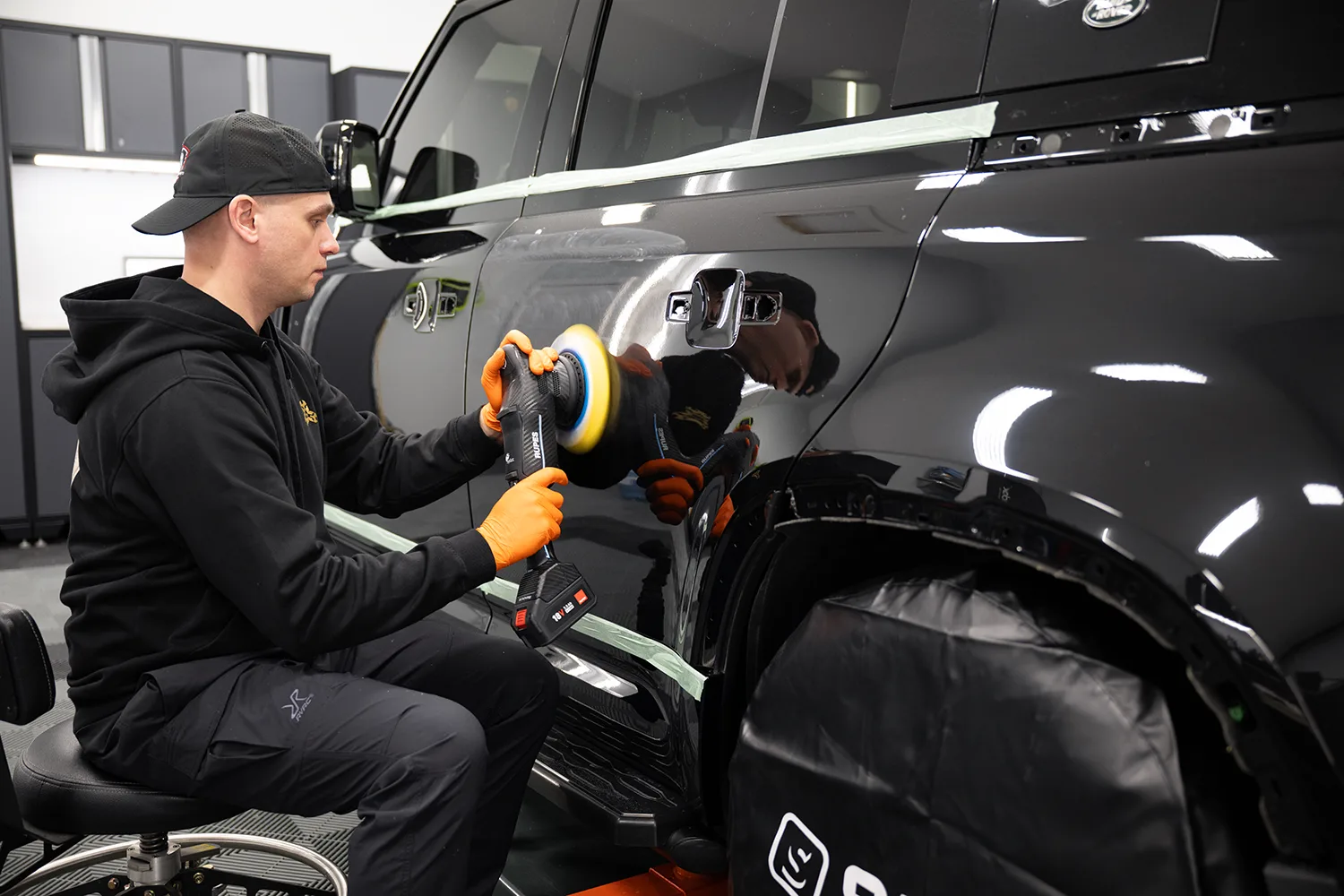
Paint correction is the common denominator. Whether you choose PPF, ceramic coating, or both, starting with corrected paint gives you the best result. The prep work is the same — which is another reason stacking both services together makes practical sense.
Why Timing Matters: Get PPF Before the First Stone Chip
This is the single most important thing to understand about PPF, and it's the one thing we wish every new vehicle owner knew: once you have stone chips in your paint, they become visible air bubbles under the film. PPF doesn't hide existing chips — it makes them more noticeable because the film can't fully conform into the tiny impact craters.
That means every kilometre you drive without PPF is a risk. Every highway commute, every gravel road, every winter drive behind a salt truck — each one adds chips that will show through the film if you install it later. The damage is cumulative and irreversible.
The best time to install PPF is the day your vehicle leaves the dealer lot. The second-best time is today. Every stone chip you collect before installation becomes a permanent, visible air bubble under the film.
We've seen brand-new vehicles come in after just a few weeks of Ottawa highway driving with dozens of chips on the hood and bumper. Those chips don't go away — they get sealed under the film forever. If you're planning to get PPF at all, do it as soon as possible.
The Best Option: Stack Both
If your budget allows it, the best protection strategy is to stack PPF and ceramic coating together. This is what we recommend to every client who asks, and it's what we install on our own vehicles. Here's how it works:
- Paint correction removes imperfections and brings the clear coat to its best condition
- PPF is installed on high-impact areas — hood, bumper, fenders, mirrors, door edges, and optionally the full body
- Ceramic coating is applied over the entire vehicle, including on top of the PPF
The ceramic coating on top of PPF adds hydrophobic properties to the film, making it easier to wash and more resistant to staining. It also adds UV protection that extends the life of the film itself. Meanwhile, the PPF underneath handles everything the ceramic coating can't — rock chips, debris, and physical impacts.
“PPF stops the rocks. Ceramic coating stops everything else. Together, they give your vehicle the most complete protection available — and the easiest maintenance routine you'll ever have.”
— Kamil Matynia, Garage Knights
For clients who want the absolute best, a full-body PPF wrap with ceramic coating over the top is the ultimate package. But even a partial front-end PPF kit combined with a full ceramic coating delivers dramatically better protection than either product alone.
If You Can Only Choose One
We'll always recommend both, but we understand that budget is a real factor. If you need to choose one first, here's how to decide:
- Choose PPF first if you have a new or recently purchased vehicle with clean paint, you commute on highways (especially the 417 or 174), or rock chip prevention is your top concern
- Choose ceramic coating first if your vehicle already has existing chips and you're focused on easier maintenance, UV protection, and keeping contaminants off your paint
- Choose PPF first if you plan to add ceramic coating later — you can always coat on top of film, but you can't undo stone chips that happen while you wait
- Choose ceramic coating first if you're on a tighter budget and want whole-vehicle protection against Ottawa's salt, sun, and environmental contaminants right away
The key question is: does your vehicle still have clean, chip-free paint? If yes, PPF should be the priority — the window to protect that paint is closing with every drive. If the paint already has chips and wear, ceramic coating may be the more practical first step while you plan for PPF down the road.
What Does It Cost?
Costs vary based on the vehicle, the coverage area, and the specific products used. As a general guide, partial front-end PPF packages are the most affordable entry point into physical protection, while full-body PPF represents a larger investment. Ceramic coating packages range from single-layer applications to multi-layer systems with longer warranties. The stacked combination of PPF plus ceramic coating is the highest upfront cost but delivers the most complete protection and the lowest long-term maintenance.
Every vehicle is different, which is why we provide custom quotes tailored to your exact make, model, and protection goals. What we can say is that the cost of PPF and ceramic coating is almost always less than the cost of repainting damaged panels or accepting the depreciation that comes with chipped, faded, or contaminated paint.
Frequently Asked Questions
Can you apply ceramic coating on top of PPF?
Yes — and we strongly recommend it. Ceramic coating adds hydrophobic properties to the film, makes it easier to clean, and provides UV protection that extends the life of the PPF. At Garage Knights, we apply ceramic coating over PPF as standard practice when clients choose both.
Will PPF hide existing scratches or stone chips in my paint?
PPF can mask some minor clear coat imperfections like light swirl marks, but it will not hide stone chips. In fact, existing chips become more visible as air bubbles under the film. That's why we recommend paint correction before installation and why installing PPF as early as possible is so important.
How long does the PPF and ceramic coating combo last?
Quality PPF lasts 7-10 years, and professional ceramic coatings last 2-5+ years depending on the product and maintenance. The ceramic coating on top of PPF can be reapplied as needed without removing the film, so you get continuous layered protection.
Is paint correction really necessary before PPF or ceramic coating?
It's strongly recommended for both. Ceramic coating locks in the current condition of your paint — imperfections included. PPF can hide some minor swirls but not all. Paint correction ensures both products are applied to the best possible surface, giving you the clearest, most flawless result.
I just bought a new car — what should I do first?
Get PPF installed as soon as possible, ideally before you accumulate any highway kilometres. New vehicles often have minor dealer-installed imperfections that benefit from a light paint correction first. Once the PPF is on, add ceramic coating over the entire vehicle for complete protection.
Kamil is the founder and lead technician at Garage Knights, Ottawa's appointment-only detailing and paint protection studio. He is AMMO Academy and Rupes Academy trained and a certified CKWraps / Flexishield PPF installer. More about Kamil →